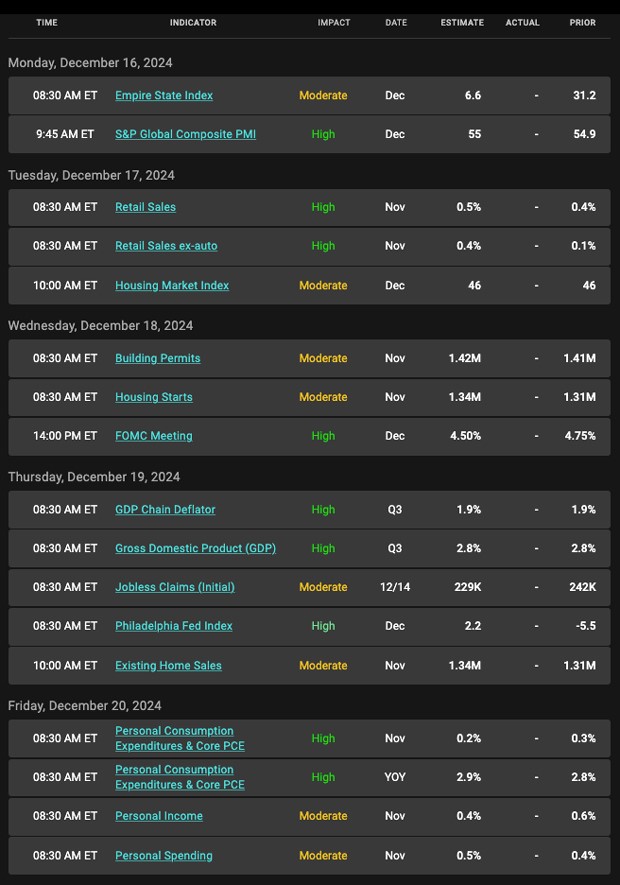
This past week, we saw interest rates tick up slightly as inflation continues to linger. Let’s break down what happened and gear up for the big Fed meeting next week.
“Can you take me higher to a place with golden streets?” Higher by Creed.
Prices Stay High
One of the Fed’s main goals is to stabilize prices, which means getting inflation back to its 2.00% target. On Wednesday, the Consumer Price Index (CPI)—a key measure of inflation—showed prices aren’t dropping further.
The Core CPI, which excludes the more volatile categories of food and energy, came in at 0.3% for November and 3.3% annually, the same as October and still well above the Fed’s target.
There’s some good news, though: rents, which make up nearly two-thirds of Core inflation, showed the smallest monthly increase in over two years. If rents keep trending lower, inflation could start easing toward the Fed’s goal.
On the flip side, the Producer Price Index (PPI), which tracks inflation at the wholesale level, showed a surprising rise in prices. The concern? Those higher costs could trickle down to consumers in the coming months.
Small Business Optimism Pops
Small businesses—responsible for a big chunk of private-sector jobs—are feeling more upbeat. A recent survey showed their optimism index jumped several points, climbing above its 50-year average for the first time in three years.
This is a great sign for housing, as expanding businesses with new hires can help drive more activity in the market.
Fed Rate Cut Coming… But
The CPI report was the last key inflation reading ahead of next week’s Fed meeting. With inflation data meeting expectations, markets are fully anticipating a 0.25% rate cut on Wednesday.
That said, reports suggest the Fed plans to be more cautious with cuts moving forward, as inflation remains sticky and fiscal policy continues to create uncertainty.
4.20%
The 10-year Treasury yield—closely tied to mortgage rates—has been wrestling with the 4.20% mark. If yields break below that line, rates could improve further. If not, we might see them stall or rise.
Bottom Line
Rates have made strides in recent weeks but seem to be leveling off as inflation remains stubborn and the outlook for future rate cuts is murky.
Looking Ahead
Next week’s focus will be on the Federal Reserve. On Wednesday, they’re expected to announce a rate cut and share their updated Summary of Economic Projections. This includes forecasts for growth, unemployment, inflation, and future rates.
By Friday, we’ll see the Core Personal Consumption Expenditure (PCE) Index—the Fed’s preferred inflation gauge—which is expected to show a 2.9% increase over the past year. That’s still well above their 2% target, so there’s a lot riding on these numbers as we head into 2024.
Stay tuned!
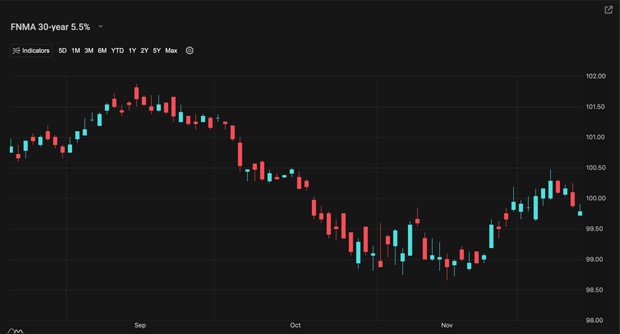
Mortgage Market Guide Candlestick Chart
Mortgage bond prices determine home loan rates. The chart below is a one-year view of the Fannie Mae 30-year 5.5% coupon, where currently closed loans are being packaged. As prices move higher, rates decline, and vice versa.
If you look at the right side of the chart, you can see how prices have backed away from $100.50, the best levels since October. Next week’s Fed meeting may determine whether prices continue higher and rates can recapture the recent losses.
Chart: Fannie Mae 30-Year 5.5% Coupon (Friday, December 13, 2024)
Economic Calendar for the Week of December 16 – 20