In this holiday-shortened week, as we pause to celebrate Thanksgiving, home loan rates dipped to their lowest levels in over a month. Let’s explore what drove these changes and take a look at what’s ahead.
“Low rider don’t use no gas now, low rider don’t drive too fast”. Low Rider by War.
Markets Celebrate New Treasury Secretary
This week started with good news for both stocks and bonds as Scott Bessent was nominated to be the next Treasury Secretary. Known as a fiscal hawk, Bessent aims to cut wasteful government spending and boost economic growth. His pro-growth stance, coupled with his push for increased daily oil output, struck a favorable chord in the markets, creating optimism for both equities and bonds.
Israel-Hezbollah Cease-Fire
Early in the week, the announcement of a cease-fire between Israel and Hezbollah brought relief to global markets. While such positive geopolitical news might typically pressure bonds and nudge rates higher, the announcement also caused oil prices to dip. Lower oil prices tend to have a disinflationary effect, something bonds favor. The bond market rallied in response, helping keep interest rates on a downward trend.
Short Sellers Scrambling
The unexpected drop in interest rates this week created a ripple effect in the bond market. Short sellers—traders betting that rates would rise—found themselves scrambling as yields fell sharply. To cover their positions, these traders had to buy back bonds, adding momentum to the bond market rally and driving rates even lower. This sequence of events gave rates an extra push downward, much to the benefit of mortgage borrowers.
Treasury Yields Drop
Treasury yields, which tend to move in step with mortgage rates, also fell significantly this week. The yield on the 10-year Treasury Note slid to 4.26%, the lowest level since mid-October. This marks a break from the recent range of 4.50% to 4.30%, and a sustained move below 4.30% could establish this as a new ceiling, helping prevent rates from climbing higher in the near term.
The takeaway: Rates are showing signs of stabilizing after the steep selloff that began in September. However, with the new Administration’s fiscal policy changes still weeks away, we should brace for continued volatility and potential rate swings.
Looking Ahead
Next week’s focus will turn to the labor market, highlighted by the November Non-Farm Payroll Report. This data will help determine whether October’s weak payroll numbers were an anomaly caused by external factors like hurricanes and the Boeing strike or if they signal a genuine cooling of the labor market. Fed Chair Powell has made it clear that further signs of labor market weakness would be “unwelcome,” so this report could have significant implications for the Fed’s policy outlook.
Bottom line: This week brought positive momentum for mortgage rates, but the road ahead remains unpredictable. Stay tuned for updates on next week’s critical labor market data, and enjoy the rest of your Thanksgiving week!
Economic Calendar
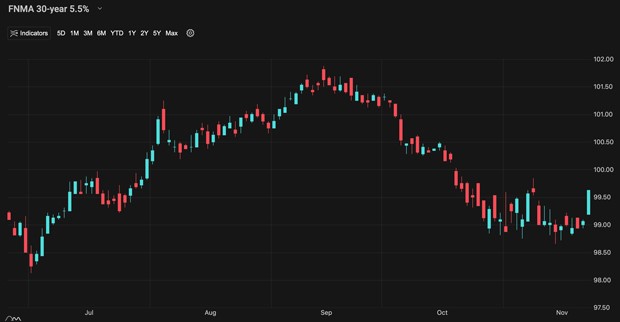
Mortgage bond prices determine home loan rates. The chart below shows a one-year view of the Fannie Mae 30-year 5.5% coupon, where currently closed loans are being packaged. As prices move higher, rates decline, and vice versa.
If you look at the right side of the chart, you can see how prices are moving sideways and resisting the urge to move another leg lower, which would create another spike higher in rates.
Chart: Fannie Mae Mortgage Bond (Wednesday November 27, 2024)