
Mortgage rates spiked to their highest level since early July, even after the Federal Reserve cut rates again. Let’s break down what happened and what we should keep an eye on in the coming weeks.
“We walk blind and we try to see, falling behind in what could be” Higher Love by Steve Winwood.
The Fed Meeting
As expected, the Federal Reserve cut interest rates by 0.25%. Since September, they’ve lowered the Fed Funds rate by a full 1.00%, bringing it down to 4.25%. These cuts directly affect short-term rates like auto loans, credit cards, and home equity lines of credit—but mortgage rates? Not so much.
In fact, mortgage rates have actually worsened since the rate cuts began. Wednesday was no different. The 10-year Note, which typically moves in sync with mortgage rates, shot up to 4.55%. To put it in perspective, back on September 16th—just two days before the Fed started cutting rates—the 10-year Note was at 3.66%.
Inflation Remains an Issue
If we had to sum up why rates jumped (and why stocks and even crypto took a hit), it would be one word: inflation.
During his press conference, Fed Chair Jerome Powell admitted that progress on lowering inflation has been “disappointing.” The bond market didn’t take those comments lightly, and rates climbed in response. Bottom line: If inflation stays elevated, long-term rates will stay elevated too.
Summary of Economic Projections
Every three months, the Fed updates its Summary of Economic Projections—essentially its best guess at where the economy is headed. Here’s the latest snapshot:
- 2025 Outlook: Slightly stronger economic growth, lower unemployment, and higher inflation than previously expected.
- Rate Cuts: The Fed now expects just two rate cuts next year instead of the four they projected back in September.
One interesting note: The Fed predicts unemployment will peak at just 4.3% (currently at 4.2%). If they’re wrong and unemployment rises higher than that, expect them to cut rates more aggressively. As Powell said, “Further weakening in the labor market would be unwelcome.”
Press Conference Takeaways
After each meeting, Fed Chair Powell takes the mic to answer questions and clarify their stance. This time around, he made it clear: The path back to their 2% inflation target is moving slower than they’d hoped.
That uncertainty rattled the markets, and rates responded accordingly.
Not Unanimous
It’s worth noting that not everyone on the Fed board was on board with the latest rate cut. Cleveland Fed President Beth Hammack voted against it, preferring to hold rates steady.
This tells us one thing: Future rate cuts are far from guaranteed. The Fed will be extra cautious, letting incoming data drive their decisions.
Bottom Line:
Mortgage rates have been climbing ever since the Fed started cutting rates, largely due to fears that inflation might reaccelerate. Going forward, every economic report will carry weight. Signs of cooling inflation or rising unemployment will help rates. The opposite? Not so much.
Looking Ahead
Next week’s economic calendar is relatively light, but we’ll still hear from several Fed officials. Their speeches will offer more clues about where they stand on inflation, growth, and the path of interest rates.
Stay tuned—things are far from settled.
Mortgage Market Guide Candlestick Chart
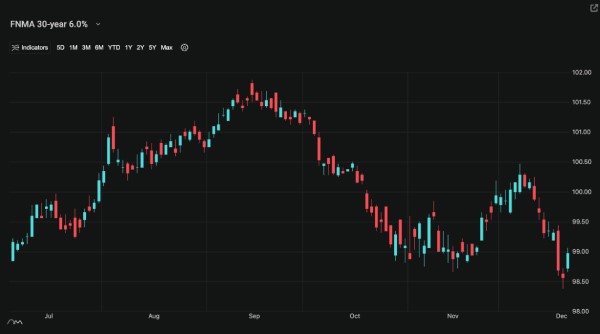
Mortgage bond prices determine home loan rates. The chart below provides a one-year view of the Fannie Mae 30-year 6% coupon, where currently closed loans are being packaged.
As prices move higher, rates decline, and vice versa. If you look at the right side of the chart, you can see how prices have declined to the lowest levels since July 4th.
Chart: Fannie Mae 30-Year 6% Coupon (Friday, December 20, 2024)
Economic Calendar for the Week of December 23 – 27


