This past week, the Federal Reserve made headlines by deciding not to cut rates and sharing their updated economic forecast. Let’s break down what they said and what we can expect in the coming week.
“Does that make me crazy? Possibly” Crazy by Gnarls Barkley.
Higher for Longer Continues
Last Wednesday, the Federal Reserve met and chose to keep interest rates unchanged, which the market had anticipated. However, what surprised many was the Fed’s updated summary of economic projections. This quarterly update includes their outlook on unemployment, economic growth (GDP), inflation, and future interest rates.
The surprises? First, the Fed expects inflation to remain steady for the rest of the year, leading them to reduce their forecast for rate cuts from three to just one this year. They also maintained their expectations for economic growth and unemployment rates, forecasting 2.1% growth and 4% unemployment by the end of the year.
Hawkish Press Conference
Thirty minutes after the Fed statement was released, Fed Chair Powell held a press conference where he emphasized their commitment to keeping rates higher until inflation moves sustainably towards their 2% goal. He acknowledged that the recent jobs report might overstate the labor market’s strength, but noted that unemployment remains at historically low levels. Powell also mentioned that he doesn’t see a recession on the horizon.
The Fed’s current stance is to keep rates steady while the economy chugs along, with potential rate cuts only happening if the data supports it.
CPI and PPI Come in Low
The Fed’s warning about inflation overshadowed the midweek reports of low Consumer Price Index (CPI) and Producer Price Index (PPI) readings for May. These low inflation readings might be a blip, as oil prices have already surged by 10% in June, reaching nearly $80 a barrel.
Bottom Line
The near-term outlook for rates is now uncertain with the Fed’s “higher for longer” stance. However, longer-term rates should gradually move lower as the economy cools and unemployment rises.
Looking Ahead
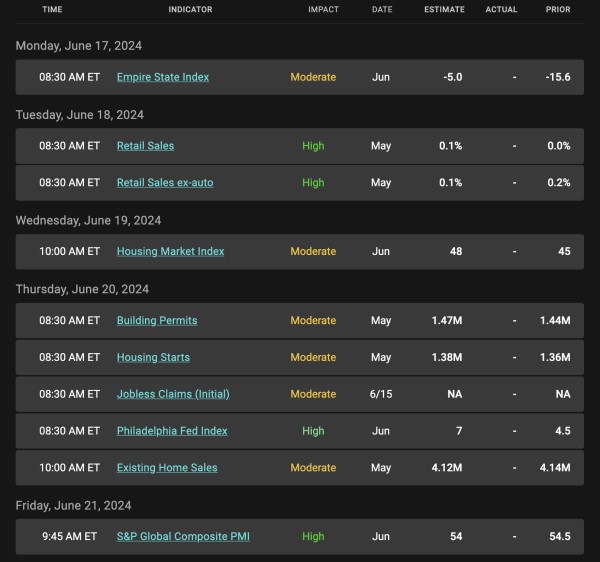
Next week brings several important economic readings, including Retail Sales, Existing Home Sales, and the S&P Global PMI. Additionally, there will be a 20-year Treasury auction and lots of Fed commentary. Given the Fed’s recent stance, expect more of the same.
Economic Calendar
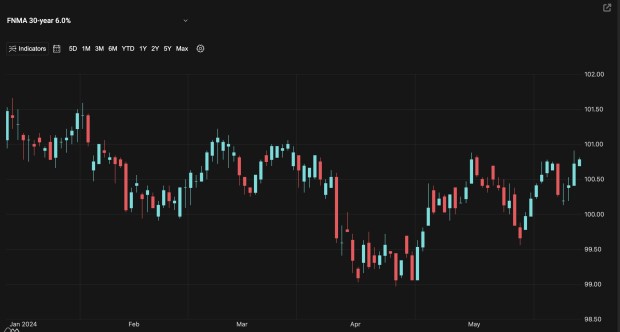
Mortgage bond prices play a crucial role in determining home loan rates. Take a look at the one-year chart below for the Fannie Mae 30-year 6.0% coupon, which shows how currently closed loans are being packaged. It’s simple: when prices go up, rates go down, and when prices fall, rates go up.
On the right side of the chart, you’ll notice that prices dipped early in the week but bounced back by week’s end, keeping rates steady.
Chart: Fannie Mae Mortgage Bond (Friday, June 14, 2024)
Economic Calendar for the Week of June 17 – 21