This past week, interest rates jumped quite a bit due to some tough news in the bond market. Let’s chat about what happened and what to watch for in the coming weeks.
“So many tears I’ve cried. So much pain inside. But baby, it ain’t over ’til it’s over.” – Lenny Kravitz, It Ain’t Over ‘til It’s Over
We Need More Revenue
The week may have been shortened by the Memorial Day holiday, but it was still packed with challenges that pushed rates up. It all started the Friday before Memorial Day when Treasury Secretary Janet Yellen announced that rates are likely to go higher and that we need more revenue.
This was a big deal because it underscores our deficit spending and the need to sell more treasury debt to fund our government.
Last week’s debt sales tested the waters, driving interest rates higher. The Treasury sold $183 billion in 2-, 5-, and 7-year Notes, but the auction results were poor, with buyers demanding higher interest rates. As Treasury yields rise, mortgage-backed security prices drop, pushing home loan rates up.
Higher For Longer
Since the Fed meeting on May 1st, where Chair Powell said they’re not hiking or cutting rates, many officials have dampened hopes for a rate cut soon.
Last week, we heard comments like “Don’t count out a rate hike” and “higher indefinitely.” This means those hoping for a rate cut might need to reconsider, as the first cut now looks unlikely until November. If inflation stays high, we might not see a cut at all in 2024.
Higher Oil
Another issue for interest rates and the economy is energy prices. Oil hit $80 a barrel last week. This matters because oil and 30-year mortgage rates often move together. When oil prices rise, so do mortgage rates. Why?
High oil prices drive inflation. If inflation remains high or climbs, the Fed won’t be able to cut interest rates, meaning higher rates for longer.
Consumer Sentiment Moves Higher
Bonds dislike inflation, more bonds, and good news. Despite the uncertainty around higher rates and elevated oil prices, last week’s consumer sentiment reading was surprisingly positive, breaking a trend of recent pessimism.
Bottom line: We should trust the Fed when it says rates will stay higher for longer. Deficit spending and high energy prices support this view.
Looking Ahead
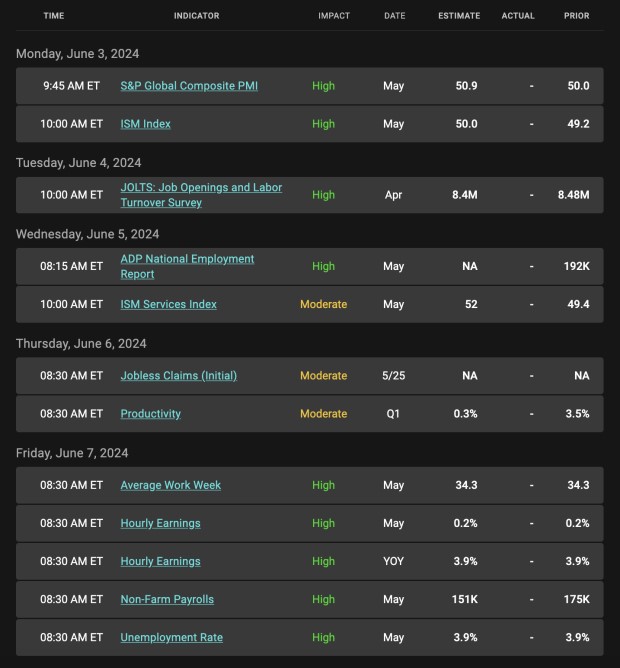
Next week is jobs week. The Fed’s mandate is to promote maximum employment and price stability. The higher-for-longer narrative depends on inflation staying high, unless the labor market weakens. Bad news on jobs could reignite talks of rate cuts. The Jobs Report is expected to show 151,000 jobs created.
Economic Calendar
Mortgage bond prices determine home loan rates. Here’s a one-year view of the Fannie Mae 30-year 6.0% coupon, where currently closed loans are being packaged. As prices move higher, rates decline, and vice versa.
If you look at the right side of the chart, you can see how prices have backed away from the best levels in a month.
Chart: Fannie Mae Mortgage Bond (Friday, May 31, 2024)
 8
8
Economic Calendar for the Week of June 3 – 7