This past week, interest rates moved lower, nearing levels we last saw in March. Let’s dive into why this is happening and take a look at what’s ahead.
“It’s more than a feeling (More than a feeling) When I hear that old song they used to play” – More Than a Feeling by Boston.
One or Two?
At the recent Fed meeting, the big surprise was Fed Chair Powell suggesting there would only be one rate cut in 2024, down from the two cuts forecasted just three months ago. Why the change? The Fed sees inflation running hotter than expected and has adjusted their plans accordingly.
However, despite the Fed’s “higher for longer” stance, the financial markets and many on Wall Street still believe the Fed will cut rates twice this year—once in September and again in November.
Why the Disconnect?
The economy is slowing down, and consumer spending, which makes up two-thirds of our economic growth, is showing signs of pulling back. If consumer spending retreats, our economy can’t grow, unemployment rises, and a recession could follow. The Fed is aiming for a “soft landing” where they keep rates higher for longer and gradually lower them without causing too much disruption. But if the consumer pulls back faster than expected, the Fed might have to cut rates sooner than they plan.
The Canary in the Coal Mine
Retail Sales is a key figure to watch since consumer spending is critical to economic growth. Last week’s Retail Sales numbers were disappointing, with downward revisions to previous figures. When adjusted for inflation, real Retail Sales have turned negative, indicating we’re not buying more goods—we’re just paying more. Historically, when real Retail Sales flatline and turn negative, it often leads to a recession.
Housing Starts and Permits Fall Sharply
In May, both Housing Starts and Permits came in well below expectations. This shows how elevated rates and affordability issues are holding back building activity. However, if the economy slows and the Fed cuts rates, we could see a quick turnaround in this sector.
Look Around
Sometimes, it helps to simply observe what’s happening around us to get a sense of the economy. Recently, companies like McDonald’s and Starbucks have introduced “value meals” or reduced-price offerings to attract consumers, indicating a shift in consumer behavior. While the Fed wants to see this to help lower inflation, they don’t want it to go too far and trigger a recession.
Unexpected Weakness
The Fed has said rates will remain higher for longer unless there’s “unexpected weakness” in the labor market. As we move through the summer, we need to keep a close eye on labor market readings. If we see significant weakness, the Fed might cut rates sooner than expected. Right now, Initial Claims, a leading indicator of labor market health, shows a large weekly increase in people filing for first-time unemployment benefits. Additionally, hires and quits are near pre-pandemic levels and continue to decline.
Bottom Line
The recent weakness in the labor market and economic reports is somewhat welcome by the Fed, as they believe it will help push inflation lower. Moving forward, we could see continued gradual improvement in rates as the economy slows, inflation declines, and central banks begin lowering rates.
Looking Ahead
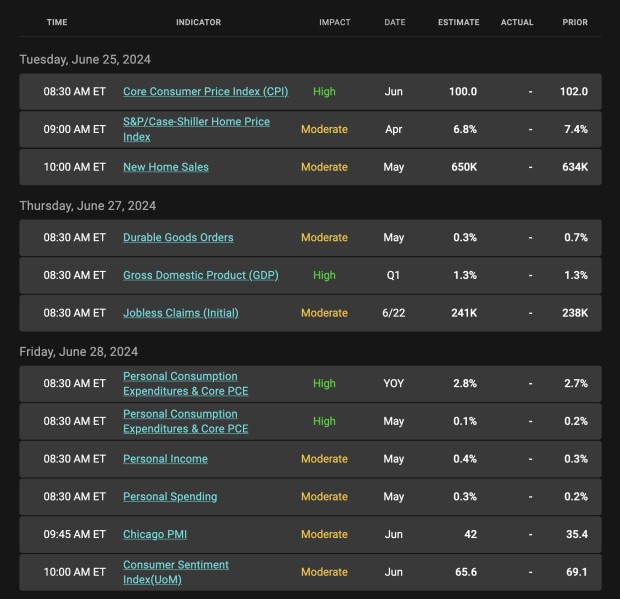
Next week brings the Fed’s favorite gauge of inflation, the Core Personal Consumption Expenditure (PCE) index. This reading is expected to come in at 2.6% year-over-year, close to the Fed’s 2% goal. However, the Fed has recently acknowledged that they don’t expect this reading to improve any further this year, which is why they are planning only one rate cut. If the reading comes in surprisingly low, it could quickly change the Fed’s outlook.
Looking Ahead
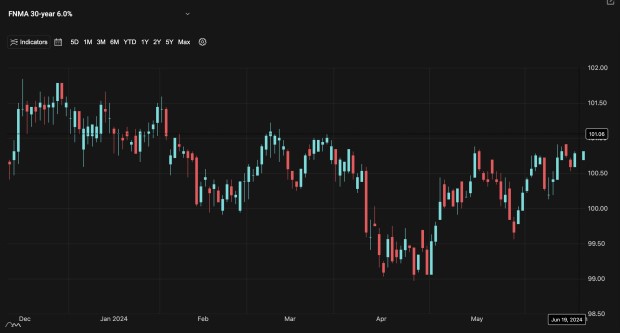
Mortgage bond prices play a key role in determining home loan rates. Below, you’ll find a one-year chart of the Fannie Mae 30-year 6.0% coupon, which shows how currently closed loans are being packaged. Simply put, when prices go up, rates go down, and when prices fall, rates rise.
Take a look at the right side of the chart—prices have climbed back up to the best levels we’ve seen in a couple of months. This comes just in time for an important news week ahead.
Chart: Fannie Mae Mortgage Bond (Friday, June 21, 2024)
Economic Calendar for the Week of June 24 – 28