
This past week, the Fed shook things up by cutting the Fed funds rate and giving us fresh insight into where the economy and rates might be headed. Let’s break it down and look at what’s coming up.
“You’ve been Thunderstruck” Thunderstruck by AC/DC.
The Fed Goes Big
On Wednesday, the Federal Reserve surprised the markets with a 0.50% cut to the Fed funds rate, bringing it down to 4.75%–5%. This was the first rate cut since the pandemic, and it’s the largest initial cut since the Great Recession. The Fed decided to go bigger this time because inflation is cooling down, and they’re trying to prevent any more damage to the labor market.
Fed’s New Forecast
Along with the rate cut, the Fed also gave us an updated look at their economic outlook. Since their last forecast 90 days ago, they now expect a bit slower economic growth, higher unemployment, and slightly lower inflation. While they originally planned for just one rate cut, they’ve now factored in four—two of which they implemented on Wednesday. Powell emphasized that rates aren’t set in stone and will depend on how things unfold. If the economy slows further, we could see more cuts; if it heats up, the opposite could happen.
Not Everyone Agrees
It’s worth noting that the decision to cut by 0.50% wasn’t unanimous. Fed official Michelle Bowman preferred a smaller 0.25% cut. This marks the first dissenting vote in nearly two decades.
Impact of the Rate Cut
Keep in mind that a Fed rate cut doesn’t directly affect mortgage rates. It’s more about short-term rates like auto loans, credit cards, and home equity lines. It will also impact the interest you earn in your savings account. Mortgage rates are mainly driven by the outlook for the economy and inflation. Even before this Fed meeting, home loan rates had already dropped to the lowest levels in 19 months, in anticipation of this move. It’s still unclear how much lower mortgage rates will go.
Bottom Line: Mortgage rates have been steadily improving since April, thanks to the Fed’s rate cuts and the slowing economy. How much more improvement we’ll see is still uncertain, and it’s going to depend on the economic data that rolls in.
Looking Ahead
Next week could be pivotal in determining if lower rates stick around. The Fed’s favorite inflation gauge, the Core PCE, comes out on Friday. If it shows inflation is still softening, mortgage rates could benefit. On top of that, we’ll get a look at our GDP and hear from Fed officials on their economic outlook, all of which could move the markets.
Economic Calendar
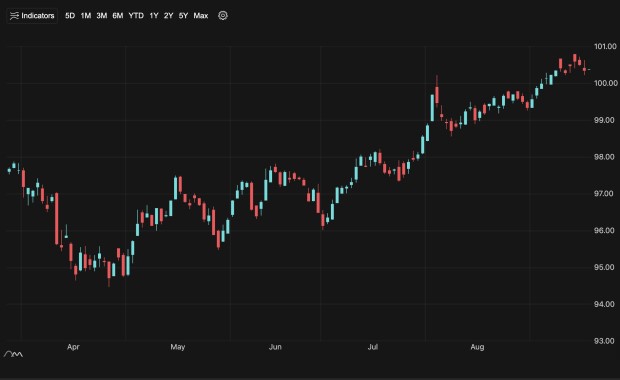
Mortgage bond prices determine home loan rates. The chart below is a one-year view of the Fannie Mae 30-year 5.0% coupon, where currently closed loans are being packaged.
As prices move higher, rates decline, and vice versa. If you look at the right side of the chart, you can see how the price gains during September stopped at the Fed rate cut. This means rates stopped improving once the Fed cut.
Chart: Fannie Mae Mortgage Bond (Friday September 20, 2024)
Economic Calendar for the Week of September 23 – 27


